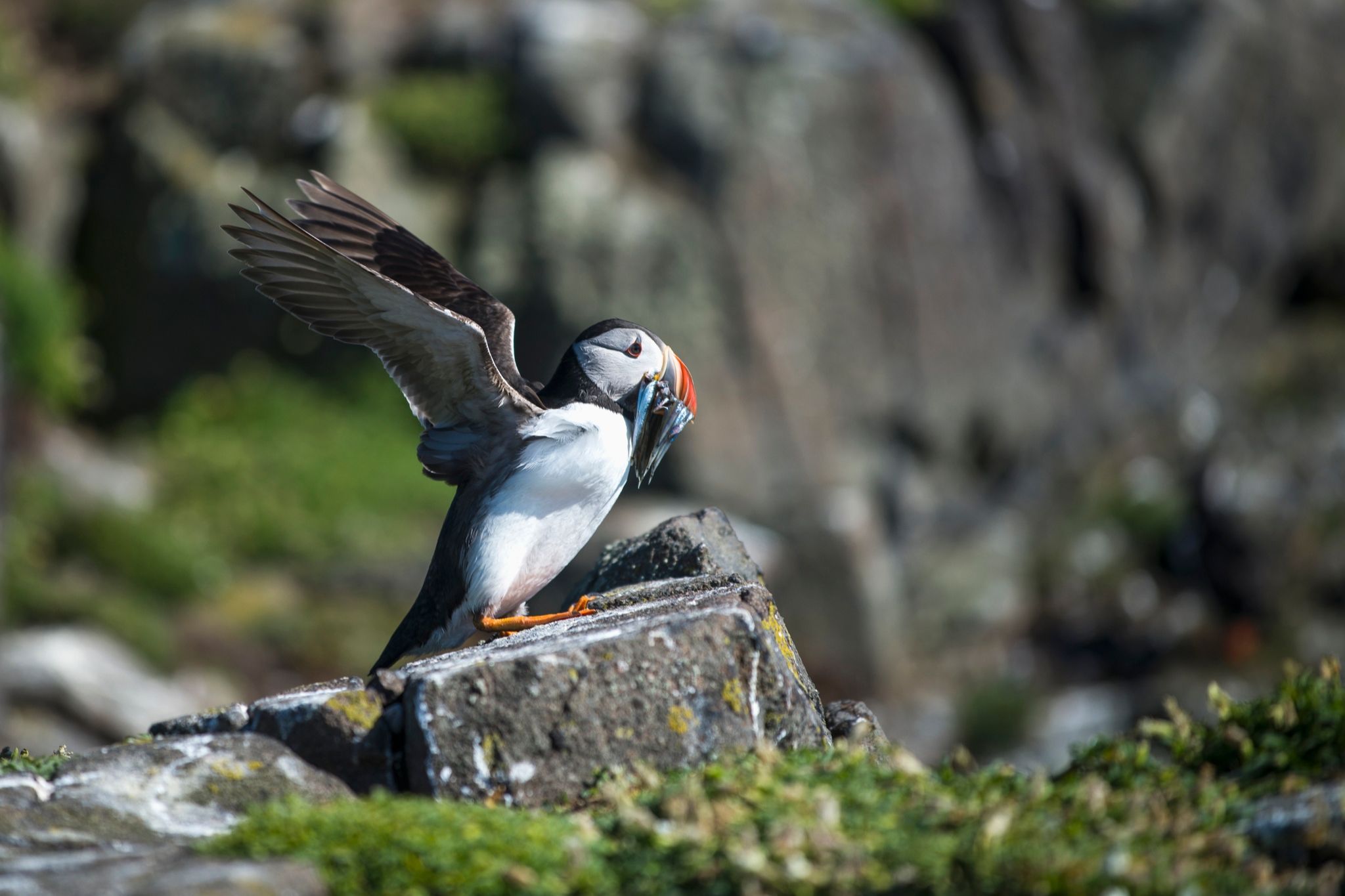
Puffin on the Isle of May, Fife
PUFFIN
These hardy little birds are one of the many bird species you are bound to come across on your travels around Scotland.
Where: Isle of Mull, Isle of Staffa, Shetland, Orkney, the islands of the Firth of Forth and the Isle of May.
When: The best time to spot these colourful birds is in the spring months of March - May.
Red Deer Stag, Glen Etive
RED DEER
One of the most iconic animals associated with Scotland, the red deer is the UK's largest land mammal and can be spotted in almost every region in the country.
Where: Isle of Arran, Isle of Jura, Lochaber, Torridon, Cairngorms National Park, and Queen Elizabeth Forest Park.
When: Red deer are best spotted during the autumn months of September - November.
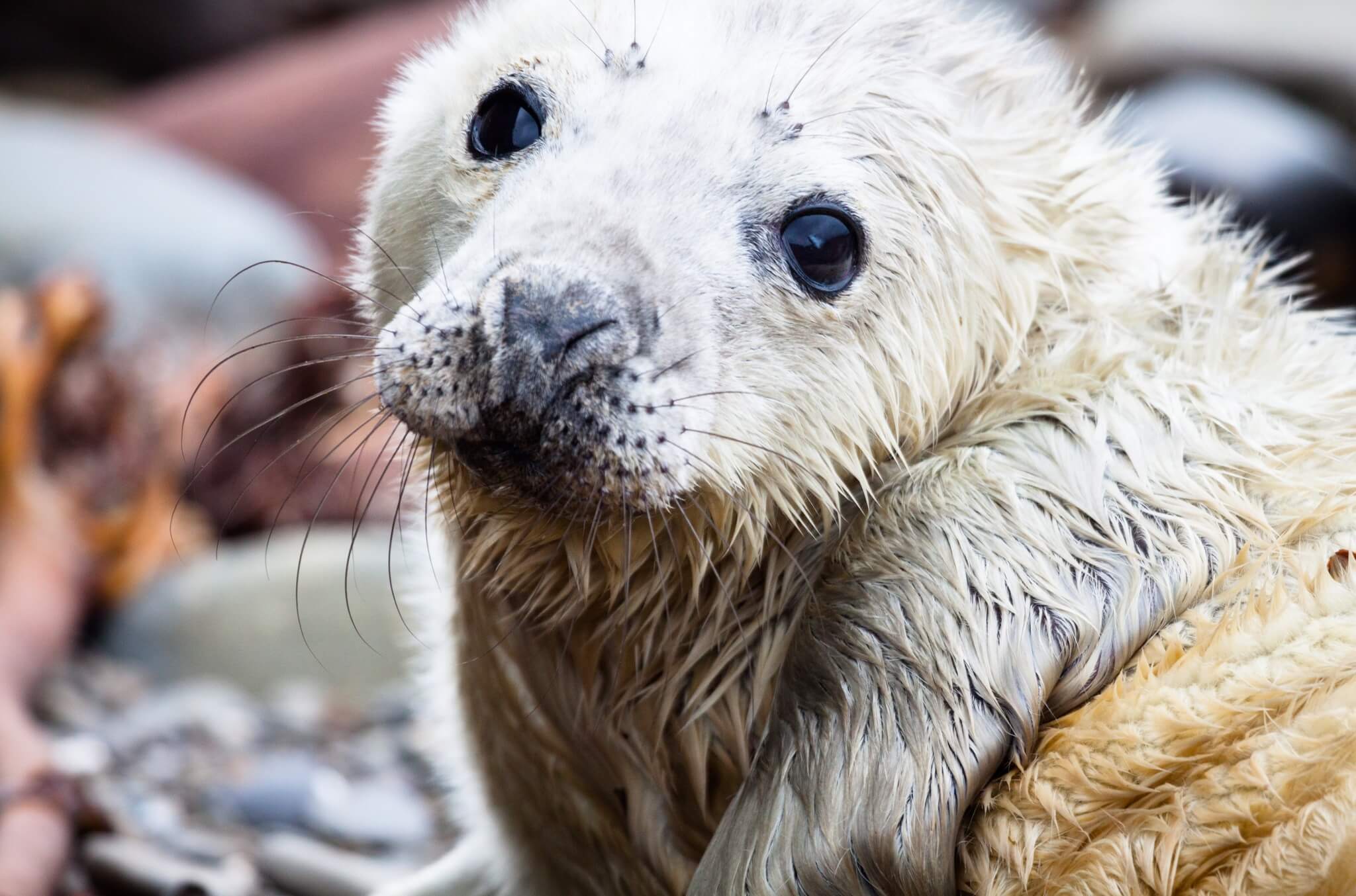
Grey seal pup
© VisitOrkney / Raymond Besant
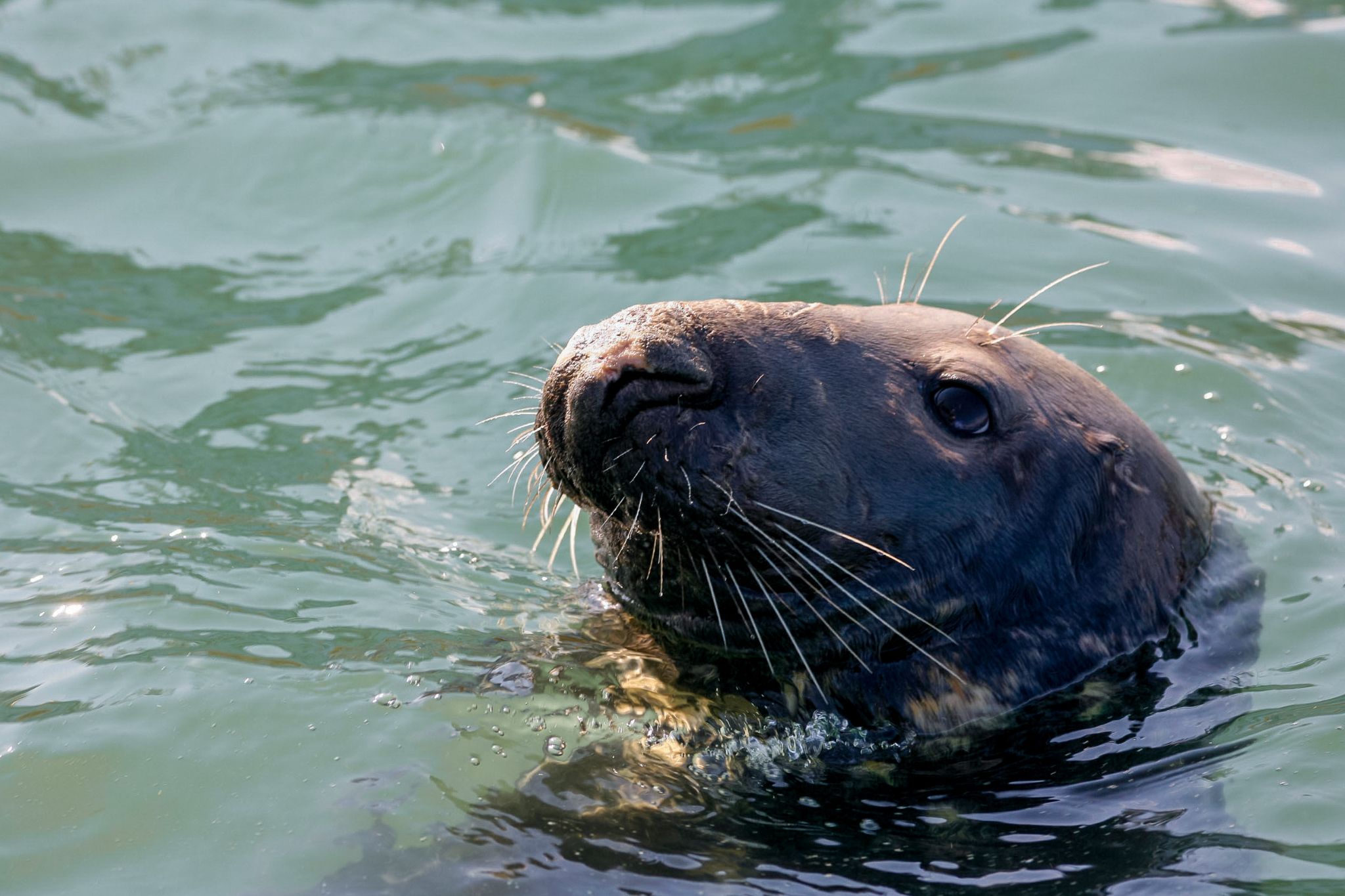
SEALS
Grey seals are very common inhabitants you can see off the coastlines of Scotland. Keep your eyes peeled in the autumn months to see if you can spot fluffy grey seal pups too!
Where: All across Scotland, but in particular the Moray Firth, Firth of Tay, Ythan Estuary and the Isle of May.
When: Grey seals are best spotted during the autumn months of September - November.
Red squirrel
© Neil McIntyre
RED SQUIRREL
Much smaller than their grey cousins, the fluffy red squirrel is an elusive addition to Scotland's forests and woodlands. Make sure you keep quiet as go on the lookout for these gorgeous little mammals.
Where: Highlands, Glenmore National Nature Reserve, Galloway Forest Park, Perthshire, Devilla Forest Red Squirrel Trail.
When: Best spotted in the winter months of December - January when their vibrant reddish coats will stand out against the snow.
Troup Head Nature Reserve Gannet Colony
© Discover Fraserburgh / Damian Shields
Gannets
Bass Rock in East Lothian is one of the best places to see gannets and marine life in Scotland. Only a 30-minute train from Edinburgh, Bass Rock is home to the world's largest northern gannet colony. Catch a boat trip with the Scottish Seabird Centre from North Berwick to see the colony up close and you may also be lucky enough to spot other marine life, including dolphins and seals.
Where: In addition to Bass Rock, you can catch gannets diving across Scotland including Troup Head Nature Reserve and Hermaness Nature Reserve.
When: Gannets begin to return from mid-February, but reach their peak over the summer months.